Services
The Farazzled Physio


| Service | Price |
|---|---|
| Physio Mentoring | |
| Physio Mentoring (30mins) | £75 |
| Reassurance for students, advice for new graduates, real life case studies, improving clinical skills and confidence, tips and tricks for CV's, career and professional development | |
| Face to Face Initial Consultation (1hr) | £125 |
| History, Assessment, Treatment, Advice and Education, Exercise Rehabilitation and Management Plan | |
| Follow Up Consultation (30mins) | £75 |
| Treatment, Advice and Education and Exercise Rehabilitation and Management Plan | |
| Telephone Consultation (Phone/Teams/Zoom/Whatsapp) (30mins) | £75 |
| Assessment and information gathering, advice and education, diagnosis and management plan | |
| Joint Injections for Shoulders, Hands, Fingers, Hips, Knees, Shoulders, Ankles | £400-£600 |
BSc Hons Physiotherapy (St. Georges University of London, UK)
MSc Sports Rehabilitation (Edge Hill University, Ormskirk, Liverpool, UK)
MSK Joint Injection Therapy (University of West England, Bristol, UK)
Health Care Professions Council - PH 81793
Chartered Society of Physiotherapy - 079010
Physiotherapy, as an allied health care profession, has begun to shift its management from a more bio-medical approach to a more bio-psychosocial approach to help patients. It has drifted away from an overreliance on 'hands on' therapy to a more 'hands off' approach. That's not to say we do not touch or treat patients any more but there is definitely a lot less reliance. We are more focused on patient education, engagement, empowerment and more movement rehabilitation. Lets just say; we are now starting to work with people, not on people.
While advances in assessment and management of musculoskeletal conditions have improved care for many people, there have been less beneficial developments in the provision of care for people with musculoskeletal conditions, one of which is the worrying tendency to provide too much medicine (Lewis et al, 2019). Patients feel that taking medication is the only solution they have when they are in acute pain. To an extent it's true, but being able to work around the pain is what physiotherapy is all about!
With the advances in social media and the ever growing health care structure, there has been a huge influx of the 'O' words. Overcomplicating treatment, overdiagnosing patients, overprescribing medication and over imaging for example the use of X-ray in Osteoarthritis of the knee or Frozen Shoulder or unnecessary MRI scans for the spine.
Musculoskeletal pain is always multifactorial (meaning it’s never just one particular structure that’s causing a person’s pain response). However, patients are sometimes misinformed that myriad non-surgical health care options including acupuncture, manual therapy, myofascial release, trigger point therapy, electrotherapy, injections, pharmacology among others will 'fix' the problem. They are simply 'adjuncts' to help you regain confidence and remove that fear avoidance behaviour to then allow a patient to return to their meaningful activities.
Up to 70% of people experience shoulder pain and 90% experience low back pain at some stage in their lives. One may argue that these common musculoskeletal conditions can be considered unpleasant yet 'normal occurrences. Emerging evidence suggests that direct access to physiotherapy could provide better outcomes in terms of disability, quality of life, and healthcare costs compared to primary GP-led medical care for patients with musculoskeletal disorders (Demont et al, 2021)
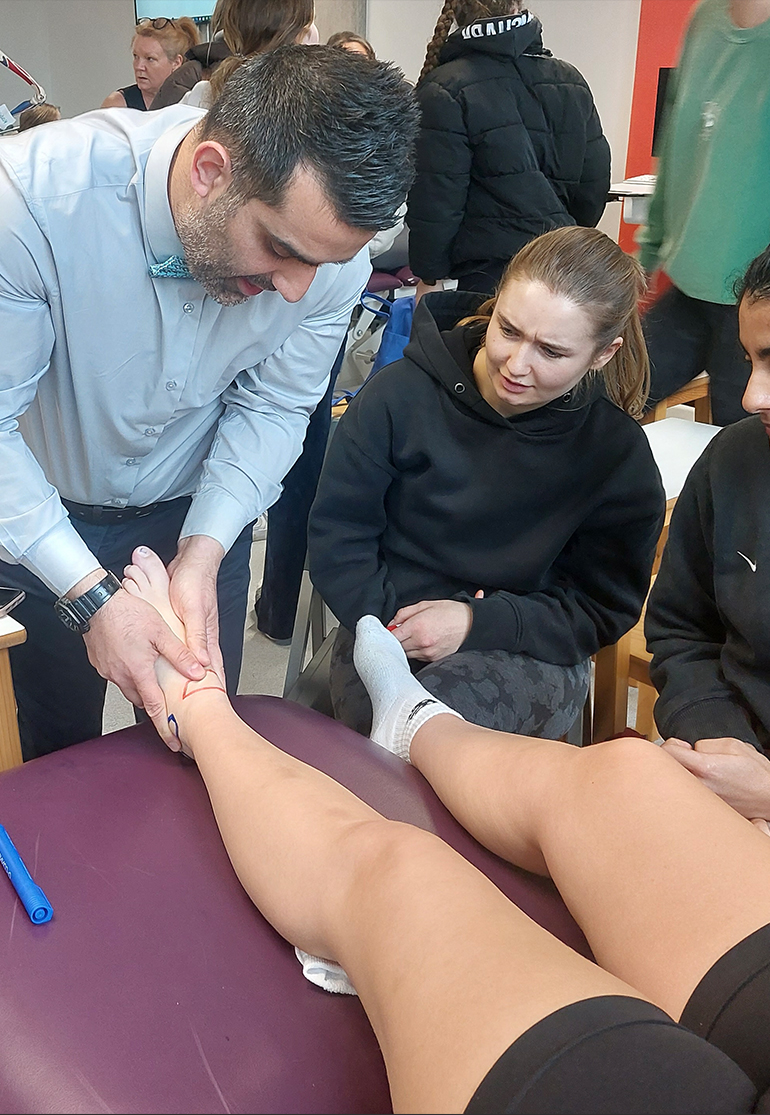

Need a private sports physiotherapist in Bordon, Hampshire?
Cant get a GP appointment to discuss your injury?
Fed up waiting for your NHS Physio appointment or had a negative experience?
Need physio treatment and a specific tailored rehab programme?
Not sure if you need some imaging, blood tests or onward referral to a specialist?